TinyOpenGLRenderer
A mini real-time renderer and scene editor built on OpenGL 4.5 + C++17, made for learning and experimenting with modern rendering techniques. Component-driven ECS-lite architecture, a RenderPass pipeline, and a Dear ImGui (docking) editor UI.
Why this exists
Individual real-time rendering techniques are all well covered by tutorials online, but those tutorials tend to stand alone: one demo for shadows, another for volumetric clouds, a third for skeletal animation, with parameters hard-coded and a recompile needed to change a value. This project wanted the opposite — those techniques living in one scene, sharing a single lighting setup and a single render pipeline, with every parameter editable at runtime and the result visible immediately.
A sizeable share of the work therefore went into places that produce no pixels directly: splitting rendering into an explicit RenderPass sequence (passes exchange state only through a RenderContext), turning renderable things into components attached to a GameObject, and giving every component type its own Inspector panel. The payoff is that the volumetric cloud’s dozen-plus parameters can be dragged and watched live, and several clouds with different parameters can coexist in one scene; the cost is a layer of indirection over a purpose-built demo.
Screenshots
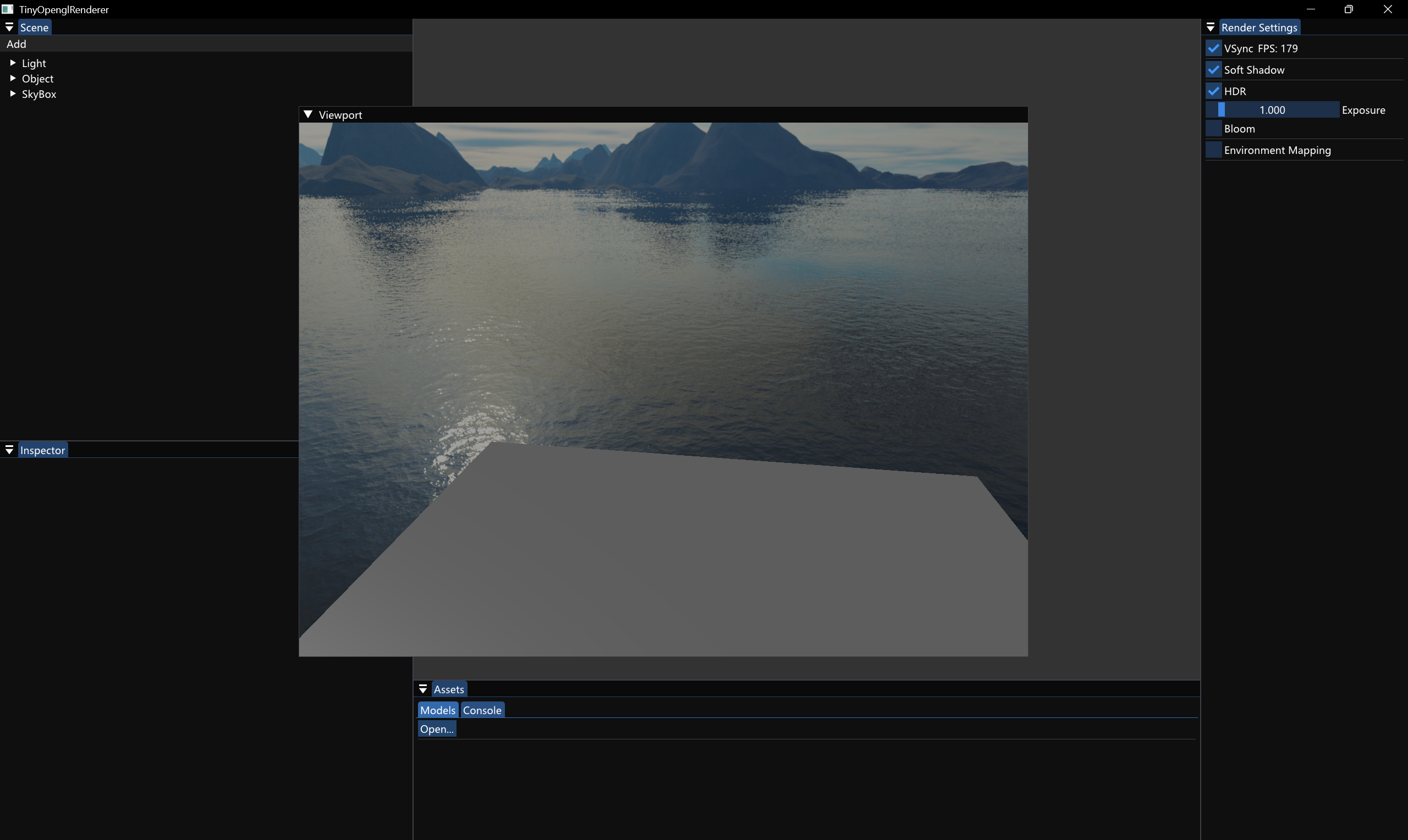
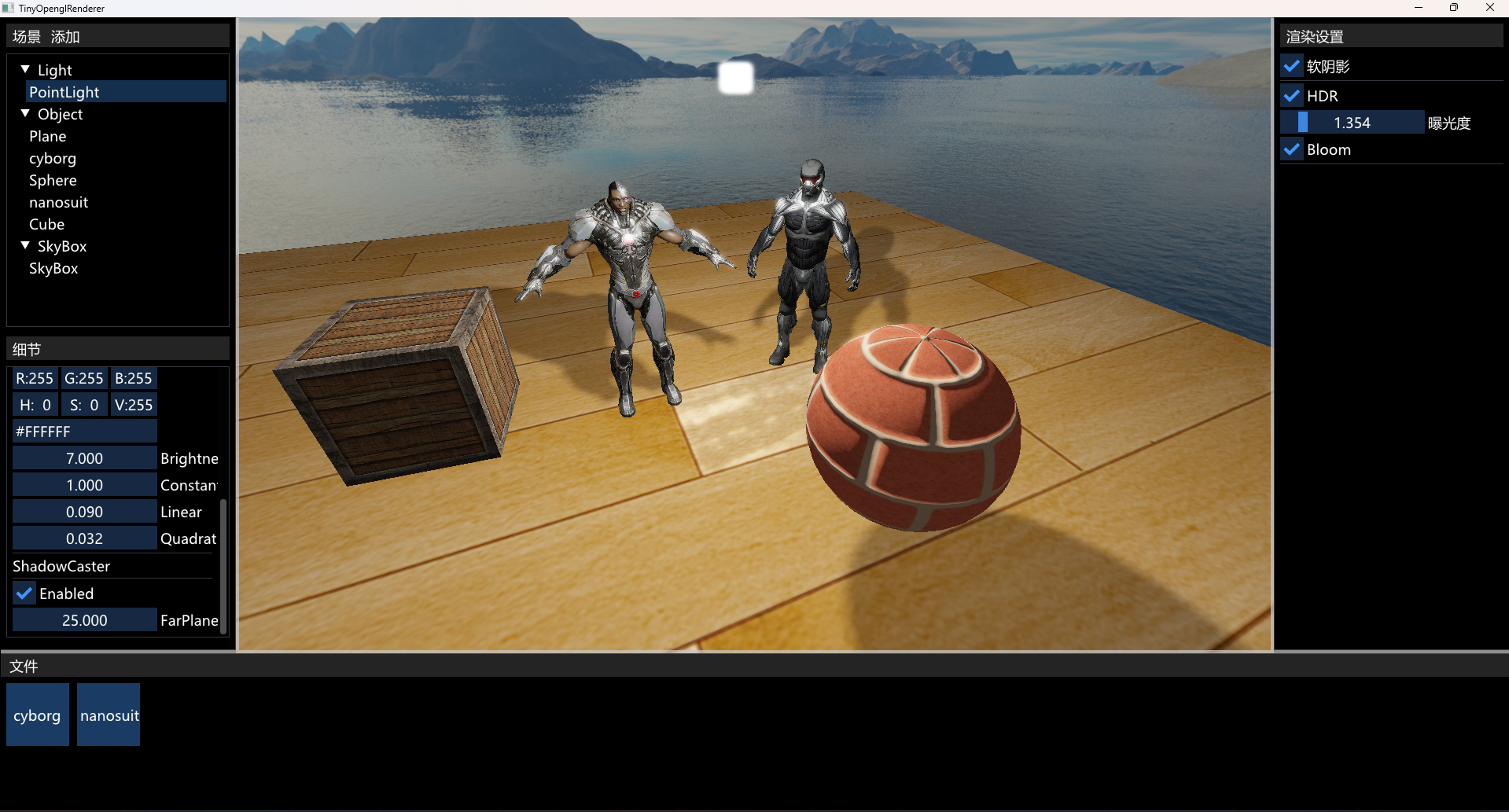
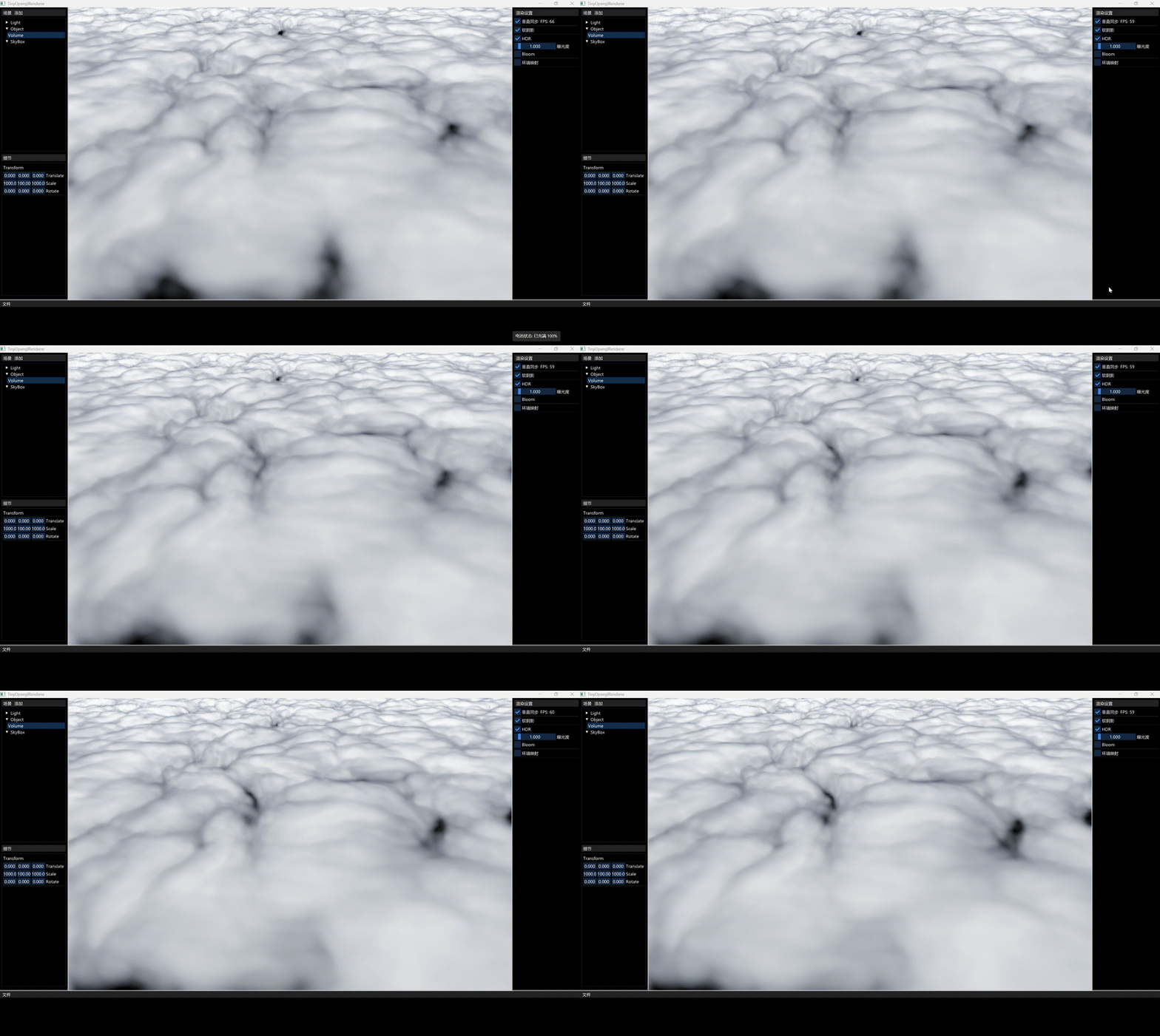
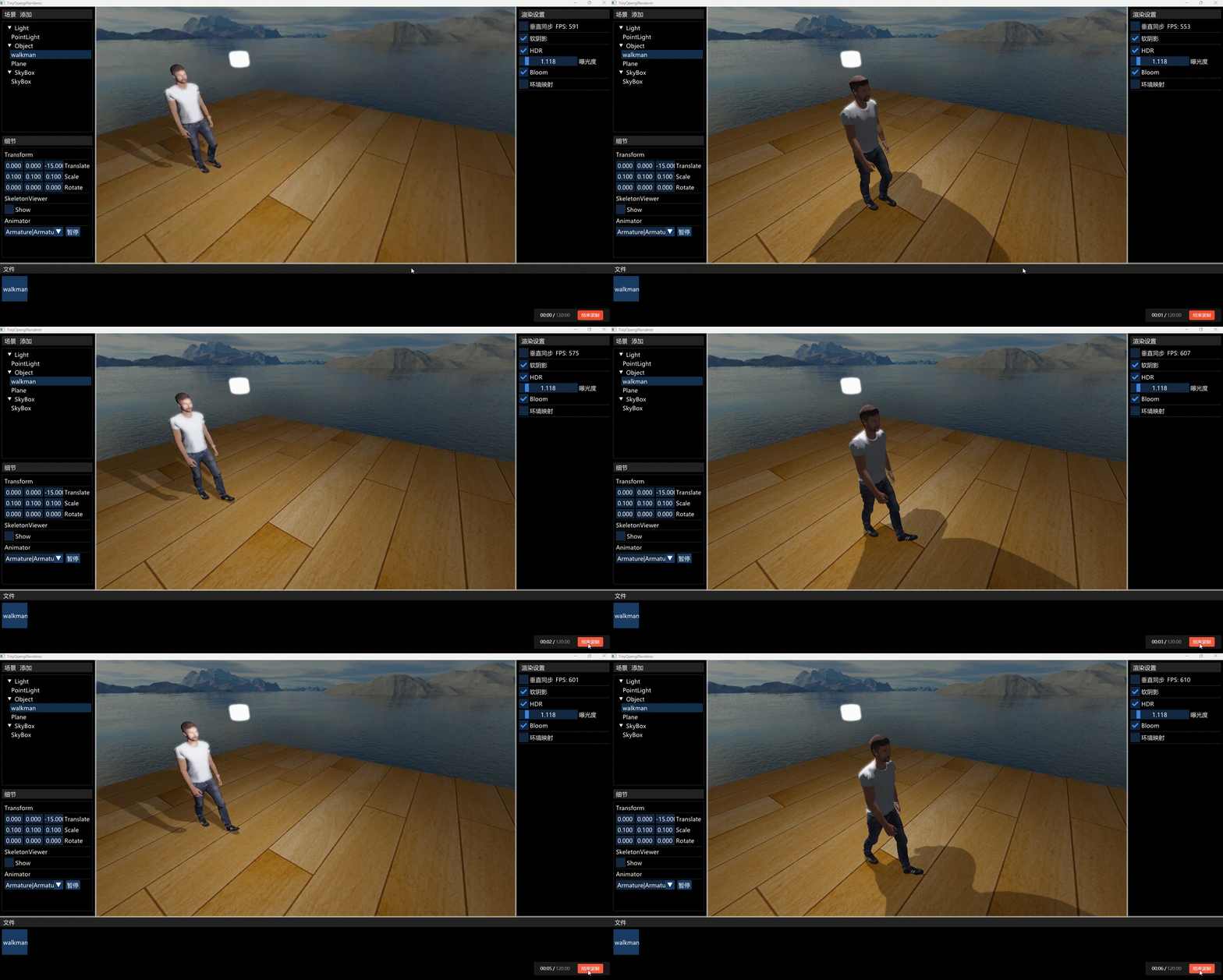
Rendering
- 🎨 Forward HDR pipeline — RGBA16F render targets, Bloom (ping-pong Gaussian blur), exposure tone mapping
- 💡 Multiple lights — directional / point / spot, light data uploaded via SSBO
- 🌑 Shadows — 2D shadow map for the directional light (front-face culling against peter-panning), cube map array for omnidirectional point-light shadows
- ✂️ Real frustum culling — Gribb-Hartmann 6-plane extraction + AABB tests; off-screen objects (including point lights) are never submitted for drawing
- ☁️ Volumetric clouds (Horizon-style raymarch) — Perlin-Worley noise (low-freq FBM shaping + high-freq Worley edge erosion, domain warping, weather-map coverage), dual-lobe HG phase, 4-octave multi-scattering approximation, powder effect, self-shadowing light march; half-resolution rendering with depth-aware bilateral upsampling, empty-space skipping, and world-scale adaptive step counts. Noise textures are generated in parallel on worker threads with a versioned self-describing disk cache (auto-invalidated on parameter changes). All 15 cloud parameters (type, coverage, noise scale, lighting, wind…) are component-driven and editable live in the Inspector — multiple different clouds per scene
- 🦴 Skeletal animation — Assimp import, GPU skinning, bone debug overlay
- 🌅 Skybox and async model loading (PLY + common formats)
Editor
- 🧩 Dear ImGui docking — scene tree / Inspector / render settings / assets / render-to-texture viewport
- 🔧 Component Inspector — dedicated panels for Transform, lights, materials, volumetric clouds
- 📌 Selection gizmo — XYZ axis arrows at the selected object’s origin (rotates with the object, always on top, constant screen size)
- 📜 In-app log console — GL debug output and engine logs inside the editor, no system console window
- ➕ Data-driven Add menu — one-click creation of lights / meshes / skybox / volumetric clouds
Architecture
- ECS-lite — GameObject + components, per-type cached scene views
- RenderPass pipeline — FrameSetup → Shadows → LightUpload → ForwardHdr → Volume/Skeleton → Gizmo → Bloom → Composite, passes share state only through a RenderContext
- Dependency injection — Engine as composition root, no singletons (except the logger)
- RAII GL resources — move-only wrappers for textures / FBOs / buffers
- Driver-detail handling — static meshes bind a dummy texture on the bone-texture unit (8) so sampler completeness passes driver validation even in scenes without animation
Tech stack
C++17 · OpenGL 4.5 — GLFW, glad, glm, Assimp, Dear ImGui (docking), stb_image. Builds with Visual Studio 2022 (x64), all dependencies bundled in-repo. Dependencies are bundled in-repo (include/ + lib/); open the .sln, pick Debug/Release x64 and build. On launch it loads a default scene with a skybox, a ground plane and a directional light.